What Are the Best Engagement Ring Ideas for Couples Who Hate Tradition?
If the phrase “classic engagement ring” makes you picture a design that belongs to someone else, you have permission to choose differently. An engagement ring can be a diamond, a sapphire, a sculptural piece of metal, a family stone reset in a new setting—or no ring at all. The best choice is the one that feels like your relationship and works for the person who will wear it.
After years around bridal accessories and jewelry, I’ve learned that couples rarely regret choosing something personal. They’re more likely to regret buying a ring they can’t comfortably wear, picking a style because it seemed expected, or skipping the practical conversation about budget and upkeep. A modern engagement ring can still feel meaningful without following a script. Here are ideas for finding a non-traditional ring that suits your taste, values, and everyday life.
First, Decide Which Traditions You Actually Want to Break
Tradition isn’t one unchangeable rulebook. It’s a bundle of customs—some romantic, some convenient, some simply familiar. You might want a surprise proposal but not a surprise purchase. You might love diamonds but dislike the single-stone look. Or you may both want rings, one ring, or a different piece of jewelry altogether.
Before browsing, talk through the parts that matter to you. These questions can help:
- Do you want the ring to be a surprise, or would you rather choose it together?
- Will one or both of you wear an engagement ring?
- Do you want a gemstone, a plain band, or something you can’t quite name yet?
- Does the ring need to work with gloves, tools, sports, or a hands-on job?
- What budget feels comfortable without creating stress?
- Are recycled materials, vintage stones, or transparent sourcing important to you?
Budget talk doesn’t spoil romance; it helps keep a meaningful purchase from becoming a financial headache. Set a range together, then treat it as useful design information. A clear budget can guide gemstone size, metal choice, and how much customization makes sense.
Modern Settings and Silhouettes with a Point of View
When people say they want a non-traditional ring, they may mean a different stone—or simply a different way of setting it. The setting changes the ring’s whole character, and it also affects comfort, maintenance, and how easily the ring catches on fabric. (I keep a mental list of settings that snag on knits. Tall prongs are frequent offenders.)
East-west stones
An east-west setting turns an elongated stone sideways across the finger. Oval, emerald-cut, marquise, and pear-shaped stones can all look fresh in this orientation. It’s a small change with a big visual effect, especially for someone who likes clean lines but doesn’t want a familiar center-stone layout.
Bezel settings
A bezel surrounds the stone with a rim of metal rather than holding it with exposed prongs. The result can feel crisp and architectural, and the rim offers some protection for the stone’s edges. Bezels also tend to have a lower profile, though the exact height depends on the design. If you work with your hands or wear sweaters year-round, ask to try the ring on and test how it feels against nearby fingers.
Asymmetry and sculptural bands
An off-center stone, a curved band, or a deliberately uneven arrangement can make a ring feel like a small piece of wearable art. These unique settings are a good fit for couples who enjoy a little visual tension and don’t need their jewelry to look perfectly symmetrical. Check that the design sits comfortably and doesn’t tilt when worn; an eye-catching profile should still be easy to live with.
Cluster, toi et moi, and multi-stone designs
A cluster groups several stones to create a larger shape, while a toi et moi design brings two main stones together. Both styles can carry personal meaning: two stones might represent partners, favorite colors, or different chapters in a shared story. Multi-stone rings also give you more options for combining shapes, sizes, and colors without relying on one traditional center diamond.
For inspiration, save images of rings you genuinely like to a few Pinterest boards. Give each board a clear theme—such as “low-profile settings,” “colorful stones,” or “rings that feel comfortable”—instead of pinning every pretty image in sight. After a week, look for patterns. Do you keep choosing warm metals, rounded shapes, or unusual bands? That’s more useful than trying to name a style before you’ve seen what draws you in.
Colored Gemstones as Storytelling
A colored gemstone can make a ring feel personal from the first glance. A sapphire might connect to a favorite place or color; a green tourmaline could recall a garden or landscape; a salt-and-pepper diamond may appeal to someone who likes natural variation over uniform sparkle. The meaning doesn’t have to be inherited or grand. “We both love this shade of blue” is a perfectly good story.
Choose with your lifestyle as well as your heart. Some gems are better suited to regular wear best trilogy engagement rings than others, and the shape, setting, and daily habits matter too. Ask a jeweler how a stone handles routine knocks, whether its surface needs special care, and what kind of setting will protect it. Don’t assume that every colored gem is automatically durable enough for everyday use.
Gemstone idea Why couples choose it What to ask before buying Sapphire Available in a range of colors and often chosen as an alternative to a colorless diamond How does the stone’s color look in natural light, and what care does it need? Spinel Offers vivid color options for a ring with a less expected look Can the jeweler explain the stone’s origin and treatment status? Tourmaline Comes in varied hues, including greens, pinks, and blue-greens Is this particular stone suitable for the wearer’s daily routine? Salt-and-pepper diamond Visible inclusions create an individual, speckled appearance How will the inclusions affect the stone’s look, structure, and care? Family gemstone Adds a connection to a person or history that matters to you Can the stone be inspected and safely reset for frequent wear?Ethics deserve direct questions, not vague reassurance. Ask where the stone came from, whether it was treated, what the company can document, and what recycled or newly mined metal options are available. If a brand dodges those questions, that’s useful information. You don’t need a perfect supply chain to make a thoughtful choice, but you should be able to understand what you’re buying.
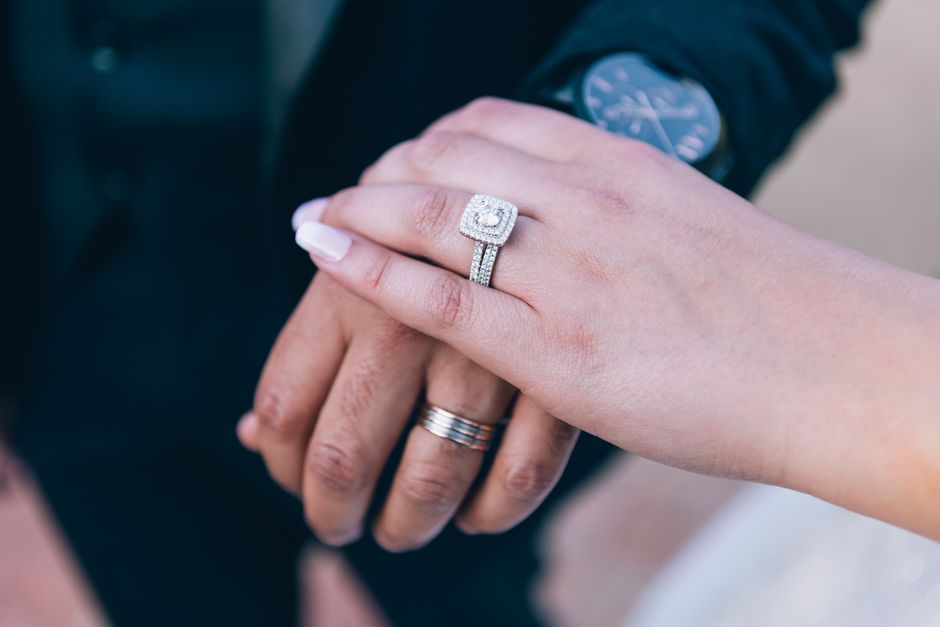
Bespoke Design: Make the Ring Yours, Not Just “Custom”
“Custom” can mean anything from choosing a stone for an existing setting to designing a ring from a blank page. Decide how much creative involvement you want. Some couples enjoy choosing every detail; others would rather set a few priorities and let a jeweler translate them into a design.

Companies such as Bespoke Bride, Lily Arkwright, and Modern Gents may come up during a search for engagement rings, but compare the actual options and policies that matter to you rather than choosing based on a name alone. Look carefully at materials, available designs, customization steps, sizing guidance, delivery timelines, and return or resizing terms. If ethical sourcing is part of your brief, ask specific questions and look for clear answers before placing an order.
A helpful design brief can be short:
- Shape: “We like elongated stones, but not a high setting.”
- Feeling: “Sculptural and a little unusual, not delicate or vintage-inspired.”
- Comfort: “A smooth band with no sharp edges, and enough room beside the wedding band.”
- Materials: “We’re interested in recycled gold and want to know what’s documented.”
- Budget: “We’d like to stay within this range, including any resizing or taxes we can estimate.”
Ask for sketches or renderings, and clarify how many revisions are included. Confirm that the center stone, metal, dimensions, and finish match what you discussed. Before approving a design, ask what happens if the finished ring doesn’t fit or feel right. The more specific the agreement, the fewer unpleasant surprises later.
Don’t Forget the Band Between Your Fingers
A ring can look perfect in a photograph and still feel distracting on the hand. Width, thickness, interior shape, stone height, and neighboring rings all affect comfort. Try on rings in person when possible, or ask about a sizing kit and clear measurement instructions if you’re shopping online. Fingers can also change size slightly with temperature and time of day, so avoid treating one quick measurement as infallible.
Pay attention to the space between your fingers. Does the setting press into the next finger? Does the band spin? Will a wedding band sit flush, or do you prefer a visible gap? If you don’t plan to wear a wedding band, you have more freedom—but it’s still worth trying the ring through ordinary movements, not just admiring it across a counter.
For active routines, ask about low-profile designs, secure settings, and whether the ring should be removed for specific activities. There is no single setting that never catches or needs care. The goal is to choose a design that fits the wearer’s real life, not an imaginary version of it.
Make the Proposal Yours, Too
Breaking tradition can extend beyond the ring. One partner might propose with a temporary band and invite the other to design the final ring together. You could choose matching but not identical rings, exchange rings at a private dinner, or mark the moment with a stone that will later be set into a finished piece. A proposal doesn’t have to follow a schedule or audience size to count.
If you’re also planning an announcement or celebration, keep the logistics in their lane. For example, an invitations promo might mention using a Google Sheet to collect RSVPs 950 platinum engagement ring and track meal choices. That’s a practical planning tool—not a requirement for the proposal itself. Keep the ring conversation centered on the person who’ll wear it, and let the event details support the celebration rather than dictate its meaning.
A Simple Checklist Before You Buy
- Choose a comfortable budget and decide whether you’ll shop together.
- Save a focused set of Pinterest inspiration images, including rings you dislike and why.
- Compare modern settings and note how each might work with daily activities.
- Ask about gemstone origin, treatments, metal sourcing, and care.
- Try on similar shapes and settings, paying attention to fit between the fingers.
- Read the sizing, resizing, return, repair, and warranty terms before ordering.
- Leave time for customization, delivery, and any final adjustments.
The Best Ring Is the One That Feels Like You
The most compelling modern engagement ring isn’t necessarily the rarest stone or the most elaborate setting. It’s the one that makes sense to the person wearing it: maybe a colored gem with a story, a low-profile bezel, an asymmetrical design, a recycled band, or a simple ring chosen together. Tradition can be a source of inspiration, but it doesn’t get the final vote.
Start with honest conversations, ask clear questions, and make comfort part of the design—not an afterthought. A ring should be meaningful enough to mark the commitment and practical enough to reach for on an ordinary Tuesday. That combination is its own kind of romance.