What Does “Rules Are Still Being Written” Mean for CBD Buyers?
CBD regulation uncertainty isn’t just a legal footnote. It affects what a product can claim, how it is tested, and what shoppers should check before buying.
Luxury used to announce itself through occasion: the evening bag, the special-occasion fragrance, the cashmere coat saved for the right weather. Increasingly, it shows up in everyday routines instead. A soft layer worn on a commute, a well-made pair of leggings, a carefully chosen supplement: comfort and personal care have become part of how people define quality.
That shift has changed fashion branding, too. Wellness language now appears beside technical fabric descriptions and fit notes. Brands such as lululemon have helped make performance clothing part of daily life, while companies including Joy Organics sell CBD products in a market where consumer interest has moved faster than federal rules. For shoppers, the challenge is separating useful product information from a polished promise.
When people say the rules for CBD are “still being written,” they mean there is no comprehensive federal pathway that clearly settles how CBD can be used in foods and dietary supplements. That uncertainty does not mean every CBD product is illegal, nor does it mean every product on the shelf has been reviewed and approved by the government. It means buyers need to pay attention to the details.
What “rules are still being written” actually means
CBD, or cannabidiol, is a compound found in cannabis. Hemp-derived CBD became more visible after the 2018 Farm Bill removed hemp—defined in federal law by its delta-9 THC concentration—from the federal Controlled Substances Act. That change did not automatically make CBD an approved ingredient in food or dietary supplements.
The U.S. Food and Drug Administration (FDA) has said that existing food and dietary supplement rules do not provide an appropriate regulatory pathway for CBD. In January 2023, the agency announced that it would work with Congress on a new approach. The FDA’s position was that CBD raises safety questions that may require a distinct framework, including questions about long-term use, exposure across multiple products, and effects on certain groups.
That announcement—often shorthand for FDA 2023 CBD—was not a blanket approval, and it was not a simple ban on all CBD products. It was a statement that the existing framework does not adequately resolve how CBD should be regulated in food and supplements. The FDA has also continued to take action against some products and marketing claims, including claims that products can treat or prevent disease.
For shoppers, the practical takeaway is straightforward: a product being sold online or in a store is not proof that the FDA has approved it. “Hemp-derived” is not the same as “FDA-approved,” and a brand’s confident language is not a substitute for documentation.
Wellness has become a fashion language
Wellness branding has moved well beyond the supplement aisle. It now shares space with fashion’s vocabulary of performance, recovery, softness, and ease. A garment might be described through its feel against the skin; a CBD product might be marketed as a way to support a more settled daily routine. Both are selling an experience as much as a physical object.
There is nothing inherently wrong with a brand talking about how a product fits into someone’s life. The question is whether the language stays within what the company can substantiate. Broad phrases such as “supports balance” can sound precise while leaving the shopper unsure what is meant, what evidence supports it, or what amount of CBD is in the product.
That is where a fashion editor’s care-label instinct is useful. Look for specifics. In apparel, “soft” is less helpful reveriepage.com than a fiber content, construction detail, and care instructions. In CBD, a mood-setting brand story is less helpful than an accurate ingredient list, the amount of CBD per serving, and a current certificate of analysis (COA) tied to the product batch.
Quiet status signals, with the same need for proof
In fashion, quiet status signals have largely replaced loud logos for many shoppers. A clean seam, considered fabric, or garment that holds its shape can do more than a prominent mark. Comfort is not an afterthought; fabric hand, seamless construction, and sensory detail are part of the design brief.
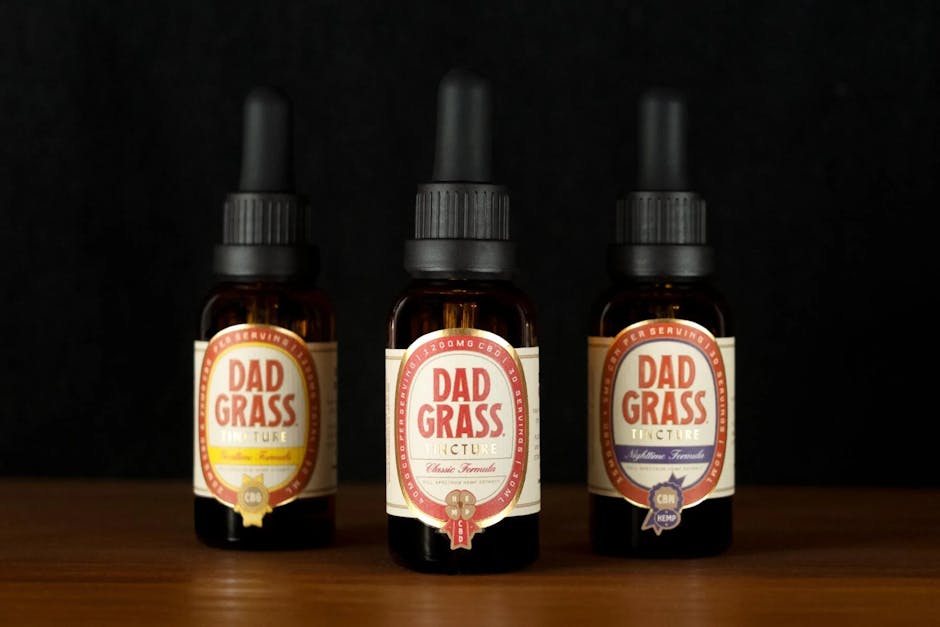
The same taste for restraint appears in wellness packaging: muted colors, minimal labels, and language that suggests discretion. But a quiet package can still conceal a loud promise. Brand polish works like a logo: it communicates identity, not necessarily product quality.
Whether you are buying a pair of leggings or a bottle of CBD, look past the visual cues. For clothing, inspect fiber content, construction, and returns policy. For CBD, look for the ingredients, the serving size, the source of the hemp, and independent testing. A pared-back design is not evidence of better sourcing or stronger quality control.
Shopper due diligence: what to check before buying CBD
Because federal rules remain unsettled, shopper due diligence matters. A reputable brand should make it possible to verify what is in the product without requiring you to decode vague marketing copy or rely on a customer-service promise.
- Find the batch-specific COA. A certificate of analysis should identify the tested product or batch and come from an independent laboratory. Check that the batch number on the report matches the package you are considering.
- Check what the report measures. Look for CBD and THC results, along with relevant contaminant testing. A report that only confirms CBD is present may not answer questions about pesticides, heavy metals, residual solvents, or microbes.
- Compare the report with the label. The COA should make the cannabinoid amounts understandable. If the label gives CBD per serving and per container, check whether the report provides enough information to compare those figures.
- Read the full ingredient list. Note carrier oils, flavorings, and other active ingredients, especially if you have allergies, take medication, or have a health condition.
- Be wary of disease-treatment claims. Claims that CBD treats, cures, or prevents a disease deserve particular scrutiny. A testimonial is not clinical evidence, and a disclaimer does not make an unsupported claim reliable.
- Check your local rules. State and local requirements can differ, and rules may affect where a product can be sold or used. If you travel, do not assume that the rules where you bought it apply everywhere.
- Ask a qualified healthcare professional about interactions. CBD may interact with some medications. If you are pregnant, breastfeeding, taking medication, or managing a health condition, get individualized medical guidance rather than relying on a product page.
These checks do not guarantee that a product is right for you. They do help distinguish a verifiable product from one that asks you to trust the packaging alone.
A quick guide to claims and documentation
What you see What to ask Why it matters “Hemp-derived” What is the source, and what does the product contain? The phrase does not mean the FDA has approved the product for food or supplement use. “Third-party tested” Can I see the current, batch-specific COA? A general testing claim is difficult to evaluate without a report linked to the product. “Supports wellness” What does that mean in concrete terms, and what evidence supports it? Broad wellness language may not tell you what outcome the brand is actually claiming. “FDA compliant” Which specific requirement is the company referring to? That phrase can sound like product approval, which is not the same thing.What responsible brands should make easy
Good documentation should not feel like an insider perk. A brand should make product ingredients, serving information, testing, and contact details easy to find. If a COA is available only after several emails, or the report cannot be matched to a batch, that is a reason to pause.
Editorial sites can help readers evaluate claims by making their own sourcing transparent, too. On PAGE Magazine, including Reverie PAGE, a clear author-page link style helps readers see who wrote a feature and what experience informs it. A plainly labeled PAGE Reader Survey link gives readers a route to share questions and experiences without presenting a brand’s claims as independent evidence.
Site structure can also make information easier to follow. A Squarespace-hosted site may serve images from squarespace-cdn and use consistent author-page links; those are useful publishing details, not proof of a product’s safety or a story’s accuracy. The same principle applies to a beautiful CBD product page: design can improve navigation, but the evidence still needs to be there.
How to shop while the framework catches up
CBD regulation uncertainty asks consumers to hold two ideas at once. CBD is widely marketed, and some brands do provide useful testing and ingredient information. At the same time, federal regulation of CBD in foods and dietary supplements remains unresolved, and the FDA has not approved CBD products broadly for those uses.

So shop the way you would assess a well-made garment: appreciate the hand and construction, but read the label. Enjoy thoughtful design, but do not let quiet packaging stand in for proof. Ask what the product contains, whether the testing is current and batch-specific, and whether the claims are clear enough to verify.
Luxury is increasingly about what earns a place in everyday life. For CBD, that standard should include more than a soothing visual identity or a promise of wellness. Until the rules are clearer, the best signal is not a logo, a trend word, or a confident claim. It is accessible documentation—and a brand willing to show its work.